
Roof Penetrations Sealed Against Water Intrusion
Copper Flashing Installation in Madison for preventing leaks at chimneys, valleys, and roof transitions
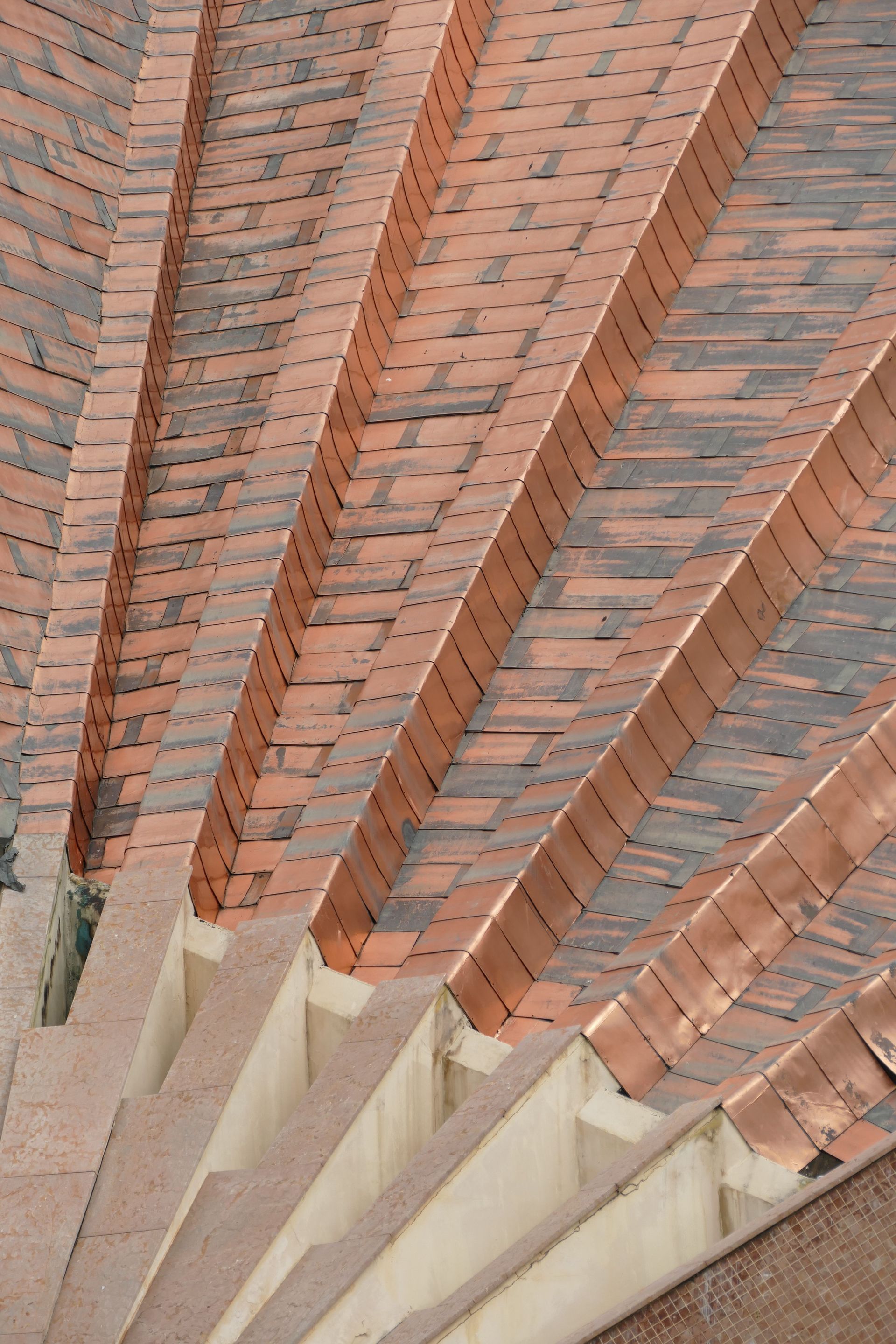
Water intrusion at roof penetrations starts long before visible ceiling stains appear—moisture migrates through gaps where chimneys meet shingles, where valleys channel runoff, and where rooflines transition between different pitches. B&B Gutter LLC fabricates copper flashing on-site for each penetration point, creating custom-fit barriers that seal these vulnerable joints where pre-formed aluminum flashing eventually corrodes and separates. Mississippi humidity accelerates the deterioration of standard flashing materials, making copper's corrosion resistance essential for homes where roof complexity creates multiple water entry risks.
Custom copper flashing is fabricated to match the specific geometry of each roof detail—chimney dimensions, valley angles, vent stack diameters, and wall intersection profiles. The flashing integrates with existing gutter systems when installed at roofline transitions, and it's sealed against both the roof surface and the vertical structure to create overlapping layers that direct water away from vulnerable seams.
Request an inspection to identify roof penetrations and transition points where water intrusion risks require flashing upgrades.
Flashing works by creating a physical barrier that redirects water flowing down roof surfaces or vertical structures, preventing it from reaching the gap where two materials meet. At chimneys, step flashing pieces are woven into shingle courses and bent up the chimney face, then covered by counter-flashing embedded in mortar joints. At valleys, flashing channels water downward without allowing it to seep under shingle edges where capillary action would draw it into the roof deck.
You'll notice that attic spaces stay dry during heavy rain once proper flashing is installed, and ceiling stains stop expanding at penetration points. Fascia boards around roof valleys no longer show water damage or paint failure, and chimney masonry doesn't develop efflorescence from moisture migration through inadequate seals.
B&B Gutter LLC's copper fabrication capability allows for complex flashing profiles that match unusual roof geometries—dormer intersections, skylight frames, furnace stack penetrations, and wall step-downs where standard pre-formed aluminum can't conform to the required shape. Installation includes sealing the flashing to both surfaces and integrating it with shingle layers or gutter systems to maintain continuous water shedding.
Answers to Frequent Service Questions
Property owners across Madison, Brandon, and the broader Jackson metro typically ask about material choice, installation timing, and how flashing integrates with existing roof systems before scheduling copper flashing work.
What makes copper better than aluminum for roof flashing?
Copper doesn't corrode in Mississippi humidity the way aluminum oxidizes at bends and fastener points; it maintains flexibility without cracking, and the patina layer protects rather than weakens the metal over decades of exposure.
When should copper flashing be installed or replaced?
Flashing should be installed during new roof construction or replaced when existing flashing shows separation from chimneys or valleys, when ceiling stains appear near penetrations, or when aluminum flashing develops holes from corrosion at fold lines.
How is custom copper flashing fabricated for complex roof details?
Material is measured and cut on-site, then bent to match chimney profiles, valley angles, or wall intersections using metal brakes and hand tools; complex shapes require multiple overlapping pieces sealed and fastened to create continuous barriers.
Can copper flashing be added without replacing the entire roof?
Yes—flashing can be retrofitted by lifting shingle courses around penetrations, installing new flashing pieces, then re-bedding shingles over the flashing; full roof replacement isn't required unless shingles themselves are failing.
Why does flashing fail at chimneys more often than at valleys?
Chimney flashing experiences differential movement as the masonry structure settles independently from the wood-framed roof, creating stress at the junction; counter-flashing embedded in mortar joints can pull loose if not properly installed or if mortar deteriorates.
B&B Gutter LLC integrates copper flashing work with gutter installations and roof transition repairs, using in-house metal fabrication to support custom flashing for homes with complex roof details. Schedule a roof evaluation to assess flashing condition and identify penetrations requiring copper upgrades.